THE HEAVYWEIGHT MIDWIFE’S GUIDE TO PLUS SIZE PREGNANCY CARE

Welcome to my Plus Size Pregnancy Care Guide!
This Guide is for you if you’re pregnant or you’re trying to conceive - or if you’re thinking about it, and if you have questions or concerns about what being plus size actually means for you and your care.
Fundamentally you are simply a healthy pregnant woman, exactly like any other healthy woman, but I know from my experience that you’ll have questions and priorities.
There are some aspects of what may be offered in your pregnancy care that might be different, and that’s wholly or partly because of your weight. I want to help to set you up with confidence for your pregnancy journey, so you’ve got the knowledge you need to feel confident and you’re not worrying about how things will be and how you’ll be treated.
Let’s get you in control! Read the Guide below and get involved in our Community Membership Group! Once you’ve read the guide, if you need closer, more detailed and bespoke support, I have options for you.
Right, let’s get into the info you need!
I am sure you’ve done some research, internet searching, looking for what you need to feel reassured and supported. This probably means you’ve seen confusing info, things that reassure you, but things that worry you too. I know can start to feel overwhelming. What you need, right from the start, not just for birth planning, is the right, accurate info. And all in one place.
That’s what I’ve created here for you in The Heavyweight Midwife, starting here in my Guide, with all the detailed info in the Step by Step Pregnancy Empowerment Plan. I’ll lead you through what to expect from your antenatal care, drawing from UK guidelines, talking you through the evidence, so you can start to make the right choices for you and your baby, starting from now. I’m a plus size specialist midwife, (and sadly there aren’t many of us around), so this means I have got the inside take on what to expect from your midwives, pregnancy guidelines, how hospital systems work, and how doctors make recommendations and how to navigate it all, feeling confident and in control.

I can help you ask for the information you need to make sure your care is personalised for you, that you get evidence-based answers to questions, that you are brimming with confidence for your pregnancy journey!

Remember that everything is a choice and anything offered is only what is recommended by your midwife or doctor, and it is up to you to ask questions to help you decide what’s right for you.
My Guide is based on the current UK pregnancy care guidelines from the Royal College of Obstetricians and Gynaecologists (RCOG), which are used to by all NHS Trusts in the UK in formulating their own local maternity care guidelines. However, there are lots of aspects of care for which there isn’t strong evidence – and this means pregnancy care guidelines might vary somewhat from Trust to Trust. Always ask questions and take notes in your consultations if you need to know more! And check in with the Group if you want to share and get support from others.
In this Guide I’ve singled out aspects which relate to plus-size care, to help you know what to expect and why it might be offered.
Hopefully what I’ve put together here is helpful for you. It’s just the start of the support and you’ll find plenty more in the Group. And think about joining my Step by Step Pregnancy Essentials Programme if you need more info and reassurance, joining up means you can check in with me at every stage of your pregnancy, so you’ll never feel confused or vulnerable.
Remember that everything is a choice and anything offered is only what is recommended by your midwife or doctor, and it is up to you to ask questions to help you decide what’s right for you.
A QUICK INTRO: ‘Higher risk’ does NOT mean ‘high risk’!
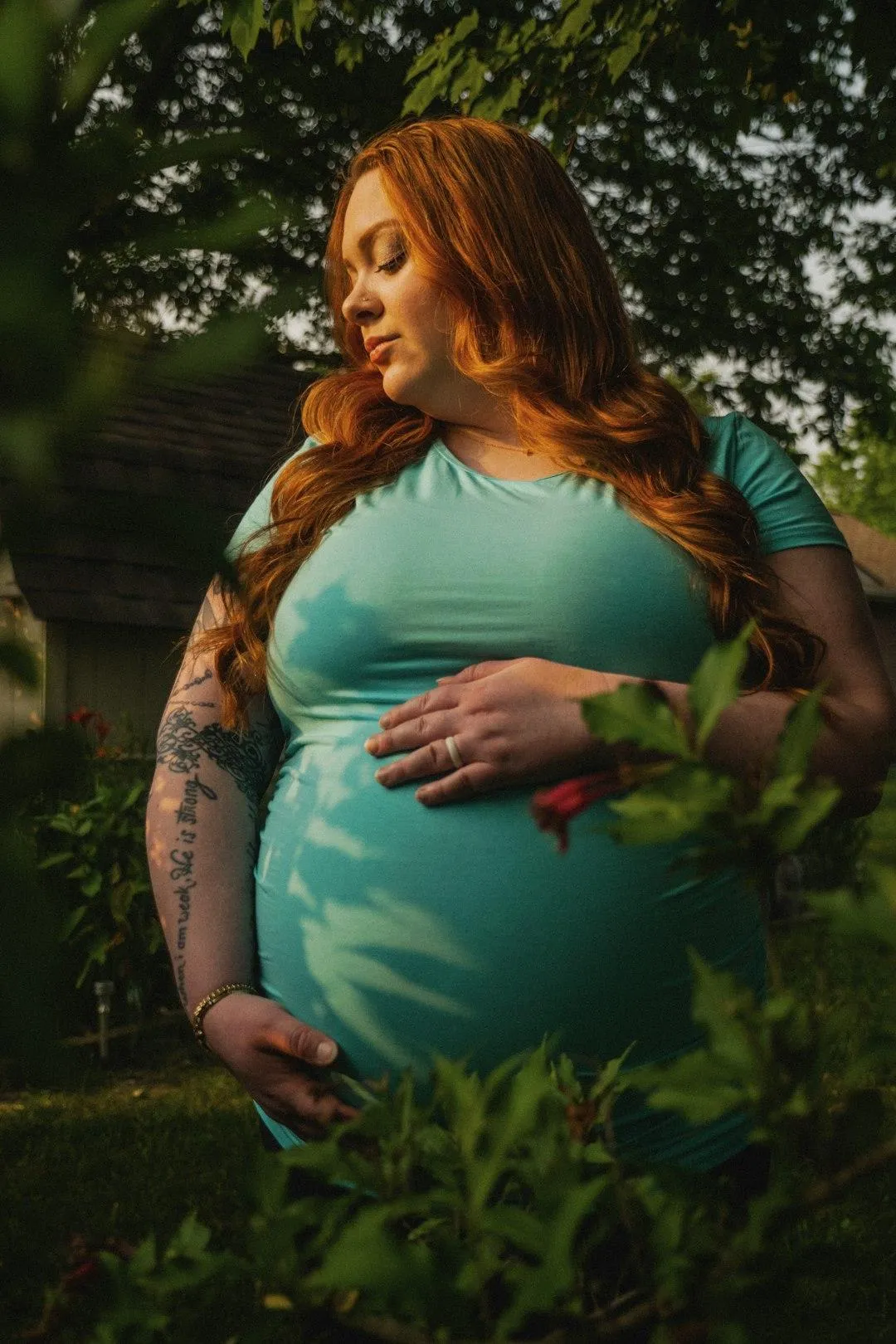
'Higher Risk' does NOT mean 'High Risk'
As midwives, a lot of our care focuses on the detection of problems and mitigation of risk for mums and babies. Midwives look after all mums-to-be and we are trained to detect problems (which is good!) but some of us are not very good at discussing the actual (small!) chances of these problems arising. This can also might mean the conversations you have don’t focus on you, your baby, and all the positive stuff you can do to keep healthy and enjoy your pregnancy. Things can get very distorted when we think about risks of complications.
Here’s the key point: for a if you are healthy and well, your risk overall of complications is LOW, no matter what you weight is. Any given risk MIGHT be a bit higher because of your weight (and I do mean ‘might’ and ‘a bit’!), but overall it is low. LOW! (Yes, I’ll say it again). By far the most likely outcome for you will be a straightforward pregnancy, birth and a healthy baby. This is my take-home message to you: ‘Higher risk’ does NOT mean ‘high risk’! I make no apologies for repeating this message - a lot.
So here goes…. Read on for a guide to your plus-size pregnancy care. Included below are some aspects of care that may differ for you if you are plus size, or that are highlighted in the UK guidelines as particularly important. It isn’t a full list of the routine antenatal care you’ll receive. It’s tailored to pregnancy care in the UK, but it will be similar wherever you are, as babies are born the same way all over the world, clinical experts work from the same evidence all over the world, so this Guide can be useful for anyone who is pregnant, also anywhere in the world!
BLOOD PRESSURE
Your blood pressure check is a measurement of how hard your heart is working as it pumps blood around your body. Normal changes happen during pregnancy, as your baby grows and your body makes more blood because you are pregnant, but it is very important to measure you blood pressure all the way through your pregnancy.
You will have it checked at your first appointment and then every time you see your midwife or doctor. If you have bigger arms, make sure the midwife is using a large cuff for this (as a guide, the cuff should wrap around with plenty of overlap, not just meet together, and there are measurement lines on the cuff for the midwife to use).
It is very important to get an accurate measurement right from your first appointment, as this is recorded as your ‘normal’ , to check for rising blood pressure later in pregnancy. A cuff that is too small will record an inaccurately high blood pressure measurement - and vice versa. So please don’t let any potential embarrassment stop you checking the cuff being used is big enough. Sometimes the bigger ones aren’t readily available (there may be one within a whole clinic for e.g.) but your midwife must use one to get that accurate reading.
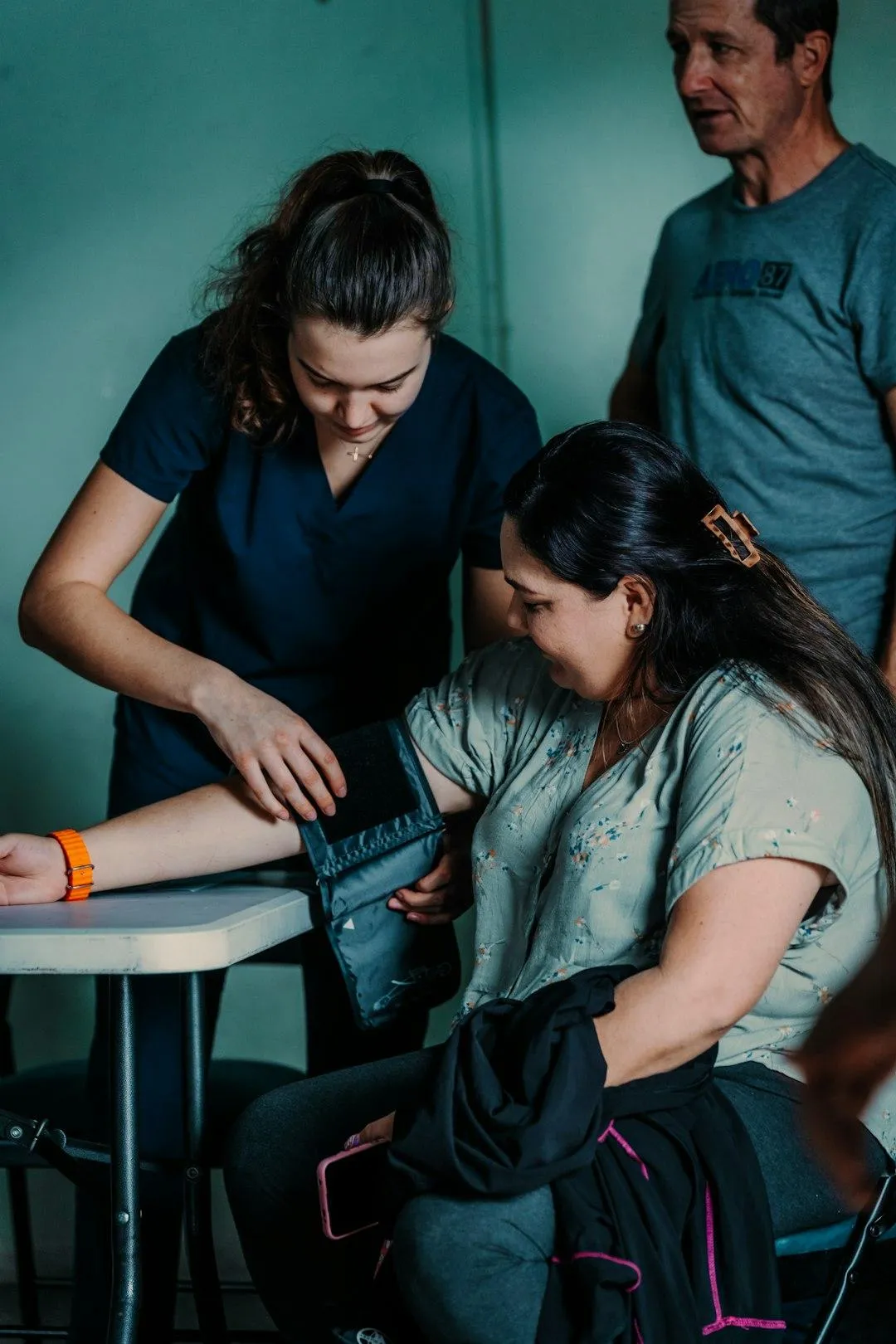
Don’t let any potential embarrassment stop you checking the cuff being used is big enough.
BEING WEIGHED AND THE BMI
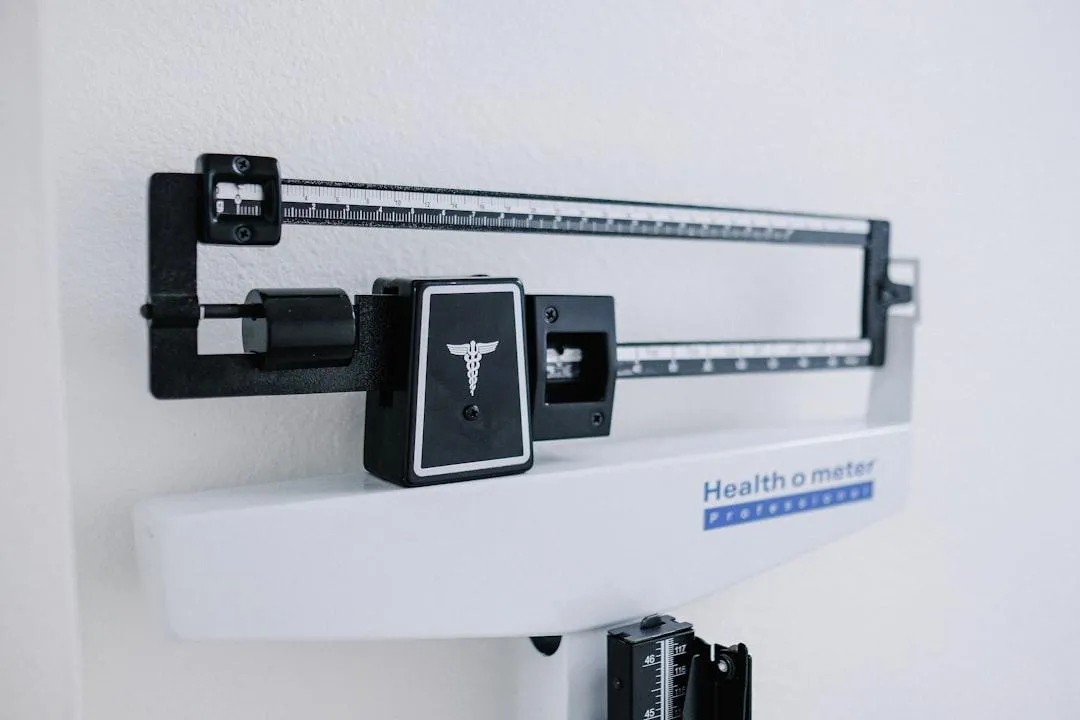
As with any other aspect of your care, this is not compulsory - it is your choice. For many people, for a variety of reasons being weighed is something that can cause or distress.
You will be asked if the midwife or health care assistant can measure your height and weight early in pregnancy . This is to calculate your Body Mass Index (BMI), to categorise you as ‘underweight’ , ‘normal’ ‘overweight’ or ‘obese’ with three classifications: ‘obese’ (BMI over 30), ‘severely obese’ (BMI over 35), ‘very severely obese’ (BMI over 40).
Your recommended plan of care will be formulated from there and may involve you being referred to see a consultant obstetrician and perhaps other specialists too. So, at your first appointment, there will likely be an expectation that you will agree to be weighed. Now, as with any other aspect of your care, this is not compulsory - it is your choice. For many people, for a variety of reasons being weighed is something that can cause or distress.
If you are concerned about being weighed - tell your midwife and ask about different options (being weighed but not being told your weight, not being weighed - are a couple of examples). This is your pregnancy and your overall wellbeing is so important! Do tell your midwife about how you feel and if being weighed is going to be difficult for you.
FOLIC ACID (FOLATE)
If your BMI is calculated as more than 30, you will be recommended to take 5mg of folic acid daily, a higher dose than the usual 400mcg (or 0.4mg). If you haven’t taken this higher dose from before pregnancy or early in pregnancy, please try not to worry – you do get folate from food sources, and if you’ve taken a lower dose up to now, this is still very beneficial.
In addition, the RGOC guidelines acknowledge ‘there is uncertainty about whether 5 mg is the appropriate dose’ of folic acid for women with a BMI more than 30 - i.e. they do not know the best dose. There is a lack of clear evidence on this, so the guidelines are based on the best available evidence.
And please remember that, for all pregnant women, the chances of neural tube defects in babies – that folic acid can help to prevent - are very low.

For ALL pregnant women, the chances of neural tube defects in babies – that folic acid can help to prevent - are very low.
VITAMIN D

10 micrograms of Vitamin D is recommended to all women during pregnancy during winter
All pregnant women are recommended to take a supplement of 10 micrograms of Vitamin D between September and March (during winter).
There is no evidence that taking a higher dose is more effective – or that a higher does is safe - and therefore 10 micrograms is recommended to you during pregnancy.
GLUCOSE TOLERANCE TEST
My key message! Gestational diabetes is caused by pregnancy. No matter what you weigh, you are much more likely to NOT develop diabetes during your pregnancy, than to develop it!
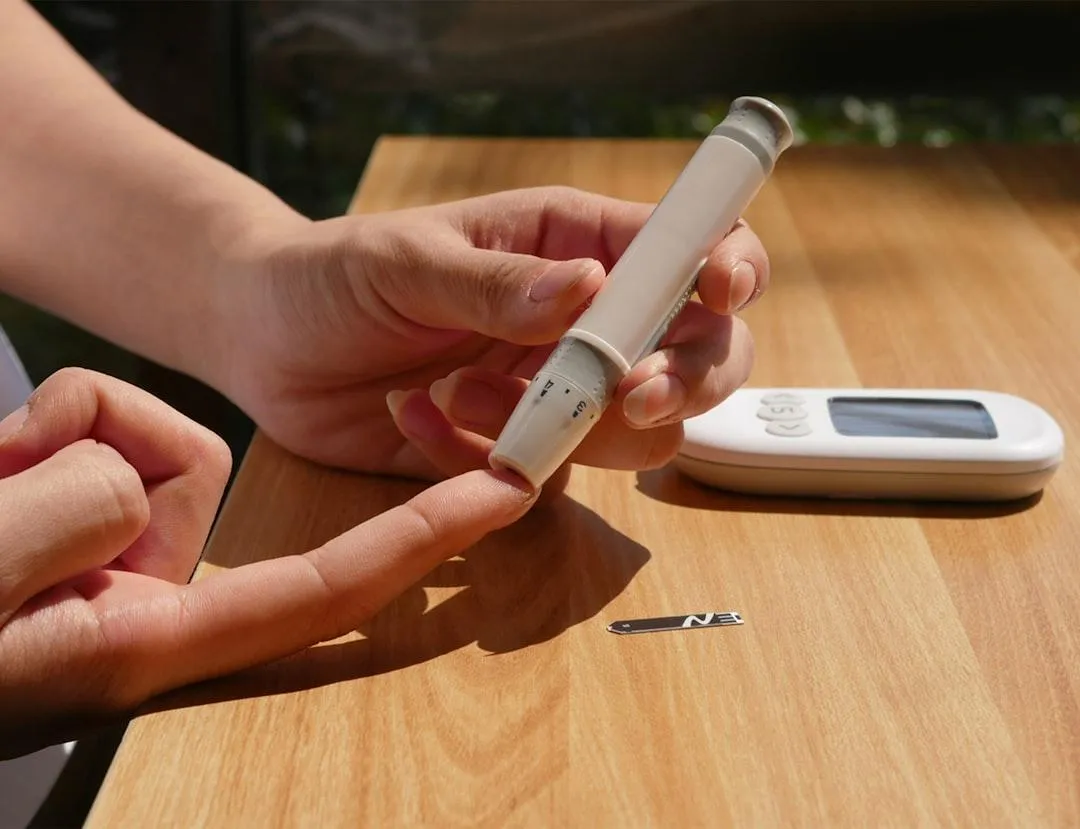
However, if your BMI is calculated as 30 or greater, you may be recommended to have a glucose tolerance test (GTT) after 24 weeks in pregnancy, and maybe another repeat one later on. A GTT measures how well your body is processing the sugar you consume through the food and drink in your diet.
It involves you having a blood sample taken early in the morning, having not eaten or drunk anything since the night before, and then drinking a measured amount of a very sugary liquid (like Lucozade). You will then be asked to wait for 2 hours, before having another blood sample taken. This is to see how well your body can process a measured amount of sugar within 2 hours.
The result will given as a number, and if you score above a certain number (this actually varies slightly in different countries!) you’ll be diagnosed with gestational diabetes.
A reminder again that between 80-90% of plus-size women DO NOT develop diabetes in pregnancy!
In addition, a diagnosis of diabetes during pregnancy means different things for different women. It does automatically not mean that you, your baby, or your pregnancy will be adversely affected, or that you will necessarily need to take medication to control this -there are many ways to maintain healthy blood glucose levels. You would be helped to monitor your blood sugar levels and should be advised individually about the best thing for you.
80-90% of plus-size women DO NOT develop diabetes in pregnancy!
ASPIRIN

Ask all of the questions you need to when asking your midwife or doctor, so you are happy with your decision.
Taking a daily dose of aspirin during pregnancy is believed to reduce the chances of developing pre-eclampsia. If you have a BMI of more than 35, you may be recommended to take 150 mg aspirin daily once you are twelve weeks pregnant and for the rest of your pregnancy, but this is based on other individual clinical factors in addition to your weight (if this is your first baby, if you are over 40 years of age, or if you are having twins for e.g.).
There is evidence that aspirin can help to reduce the chances of pre-eclampsia developing, and unfortunately pre-eclampsia is relatively common, occurring in roughly 1 in 20 pregnancies, although it is only rarely very severe/dangerous. However, the most effective dose isn’t known and the recommendation is based on expert’s recommendation. The dose is considered a ‘low dose’ , but women worry about the risks of bleeding associated with taking aspirin. The risks of bleeding are really small and doctors consider them worth it as pre-eclampsia is relatively common and sometimes can be serious.
However, this is a national recommendation for many women to take aspirin, when only a few will actually benefit. Do ask all of the questions you need to when asking your midwife or doctor, so you are happy with your decision.
ANTI-COAGULANTS (BLOOD THINNERS)
Thrombosis is when a blood clot develops, usually in a person’s leg. Pregnancy is a time when blood clots are slightly more likely to develop compared to when you are not pregnant, so your care includes helping to prevent this happening. Your weight is a factor, but again, the overall risk is low. You should expect an individual assessment of how best to prevent thrombosis (tings like, if you’ve had a clot before, if people in your family have had thrombosis, any medical conditions You might have, etc) and then to have your care planned accordingly.
Depending on your BMI calculation and individual circumstances, you may be advised to take injectable blood thinners during your pregnancy. This should be based very much on your individual clinical factors, so ask questions to ensure you understand the reasons for this and feel in control of the decision that you make.
Remember that the chances of anyone, of any weight developing a clot in pregnancy is very low.

Remember that the chances of ANYONE, of ANY WEIGHT developing a clot in pregnancy is VERY LOW.
PREGNANCY WEIGHT GAIN
If you are asked to be weighed in your second or third trimester, I would ask ‘why?’
It surprises some people to learn that in the UK we have no guidelines for weight gain in pregnancy. Perhaps this is good news - as maybe you really do not want to focus on your weight. Or maybe you feel it would be useful - we all have different preferences and needs. Some UK midwives might quote US guidelines, but remember these have been considered –and rejected – by UK pregnancy experts, who favour a focus on healthy eating in pregnancy.
So, what you can expect from your midwife is the same advice given to any pregnant woman: there is no evidence based advice tailored for plus-size pregnancy. A discrepancy here though is that some UK trusts have a policy of weighing women throughout pregnancy. I do not know why if there is no guide as to what is the ‘right’ amount of weight to gain!
Towards the end of pregnancy, there may be specific reasons to know your weight, for example if you were to need certain medications, the dose is calculated based on your weight. But, if you are asked to be weighed in your second or third trimester, I would ask ‘why?’ Specifically, as re-calculating BMI a this stage is just a nonsense! In line with this, there are no specific UK guidelines for safe & healthy nutrition in pregnancy for plus size women. The healthy eating advice is the same for everyone, regarding which foods to avoid for example.
‘HEALTHY LIFESTYLE’ SERVICES
I’m telling you all this in part because some women are offered ‘Healthy Lifestyle’ appointments during pregnancy. The provision of these services varies between different areas and hospitals though. These services have different names, but if you are unsure as to what you are being offered, just ask what it is and how you might benefit from going along. Because, whether you attend these are not is entirely up to you.
My experience, hearing from hundreds of women about these services, is that they are patronising and unhelpful (putting it mildly!). Many women have told me that the ‘healthy eating’ advice is basic and underpinned by a suggestion that they do not know how to eat well. There is no research evidence that these interventions work in terms of limiting pregnancy weight gain or any other outcomes (see the LIMIT trial from 2014 if you like checking the evidence for yourself ).
While I am certainly not telling you not to attend these appointments if offered, please know they are not compulsory and you can decline to attend if you don’t want to go or think they’ll be helpful for you..

If you are unsure as to what you are being offered, just ask what it is and how you might benefit from going along
ULTRASOUND SCANS
A Sonographer is an expert in performing the scan, but they may not be able to answer questions relating to other aspects of your pregnancy.
Pregnancy ultrasound scans are going to be a really important event in your pregnancy, giving you your first glimpses of your baby. They can be exciting and can reassure, but they can cause anxiety too. You might opt for extra private scans, but within NHS standard care you’ll likely be offered two routine screening pregnancy scans, one at around 10-14 weeks and another at around 20-22 weeks (often the called 20 week scan).
If your BMI is calculated as above 35, you will likely be offered scans at around 28 and 34 weeks - and maybe others - too, to monitor your baby’s growth. These different types of scans are designed to provide specific images and information at different stages in your pregnancy.
I’ve put together a quick summary for you of what the different scans are for, but first of all, here are general things to think about to make sure you have a positive scan experience.
Most scans are done through your abdomen, with you lying on your back (if you have a very early scan this might be done using a plastic probe which goes into your vagina, as your baby is still too tiny to see on an abdominal scan).
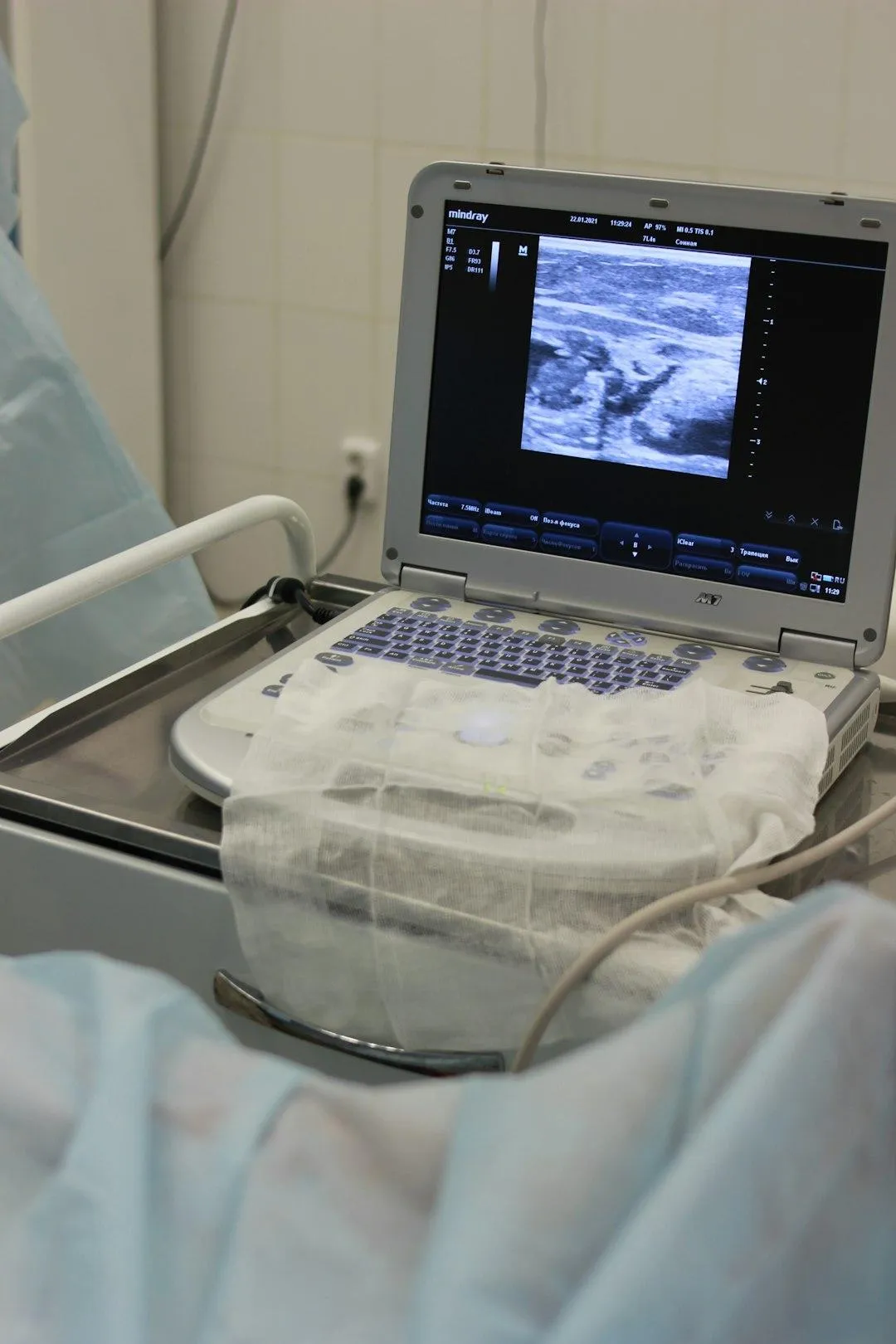
Usually, it’ll just be you, plus whoever you want to accompany you and the Sonographer, in a small room with the equipment. Sonographers are specially trained health professionals, who are sometimes also midwives or doctors, but not always.
The Sonographer will use a cold gel to help slide a probe over your tummy and your baby’s image will appear on a screen that everyone can see.
The Sonographer will talk you through what they can see during the examination and you’ll be able to ask questions. The sonographer is an expert in performing the scan, but they may not be able to answer questions relating to other aspects of your pregnancy.
Ultrasound scans can sometimes be more difficult to perform for a number of potential reasons. One of these (but only one) might be if you have a larger tummy due to your weight, but please be reassured that having a larger tummy is not necessarily going to make it difficult! Ultrasound waves are very powerful, so it certainly won’t be the case that there won’t be an image of your baby available.
Some women feel self-conscious and nervous, especially before their first scan, as it is an intimate examination. I’d encourage you to tell the sonographer if you’re nervous – and why - if you possibly can. That way you are asking them clearly to be one your side and to be sensitive to your needs and it will help you have an open discussion.
The 12 week scan is the one which calculates when you got pregnant and when your baby is due. It may also form part of screening for Down’s Syndrome or other conditions, if you choose to have this screening. It will also confirm whether you are having just one baby…. or more!
The 20 week scan allows the Sonographer to check over the anatomy of your baby in much more detail, as they are bigger by now, including the structure of your baby’s heart in detail. They can also check the position of your placenta. This is the exciting time when usually the baby’s sex can be identified, so let your know before you start if you want to know or not!
You may also be offered growth scans, which are usually done at around 28 weeks and 34 or 36 weeks of your pregnancy.
Once your pregnancy progresses beyond 20 weeks, it becomes more and more difficult to see a whole image of your baby on a scan, so these later scans don’t often produce great photos, but can measure things like blood flow through the placentas and umbilical cord, how much fluid there is around your baby, and how well your baby is growing. It’s important to know they’re not perfectly accurate for assessing growth or predicting a baby’s birthweight, and that goes for for anyone, regardless of their weight!

Ultrasound scans can sometimes be more difficult to perform for a number of potential reasons. One of these (but only one) might be if you have a larger tummy due to your weight, but please be reassured that having a larger tummy is not necessarily going to make it difficult!

A FINAL WORD FROM ME

I hope this quick guide has helped you navigate what to expect from your pregnancy care. I’ve tried to cram in as much info as I can into this but of course there are loads more things to think about and plan for, throughout your journey, and of course so much to plan for for your baby’s birth!
See you in the Group, or sign up to the Step by Step Pregnancy Empowerment Plan or book a one to one sessions if you need my specialist bespoke support.
Finally, remember that all midwives and doctors should be there to help you to have a healthy and happy pregnancy.
I can help empower you - please do reach out to me if you need help to get reassurance and empower you for the pregnancy and birth experience you deserve.
All the best for a happy, healthy and empowered pregnancy!
Dr Alice Keely - The Heavyweight Midwife
INSERT QUALIFICATIONS/OFFICIAL BODY LOGOS

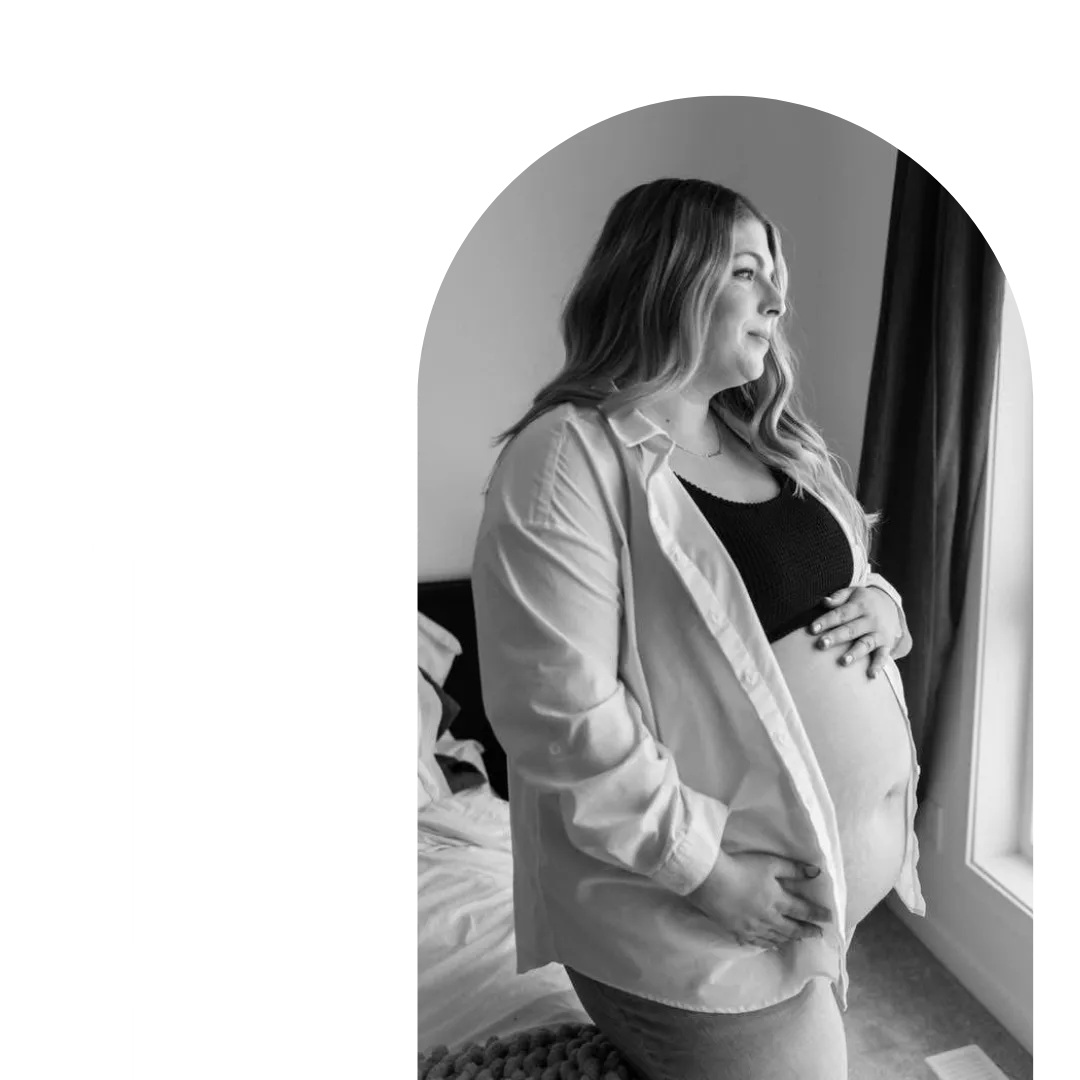

My membership and courses are unique... I will cover everything you need for pregnancy and birth preparation, with a focus on the particular considerations plus size women like you will have. There are lots of different pregnancy recommendations if you are plus size, and important decisions to make. I've designed my Plan to help you feel confident and in control, so you make the choices that are uniquely right for you and your baby, with plenty of reassurance that your weight does not make you 'high risk'!